Enterprise Asset Governance & Approval Platform

created for

Designed an enterprise Digital Asset Management platform supporting structured asset submission, approval workflows, and governance across AT&T brand and compliance teams. The platform coordinated complex review logic, permissions, and multi-team collaboration within a scalable enterprise operational system.

My Role: Senior UX Designer
Timeframe: 6 months
ENTERPRISE UX
WORKFLOW SYSTEMS
GOVERNANCE
SAAS PLATFORM
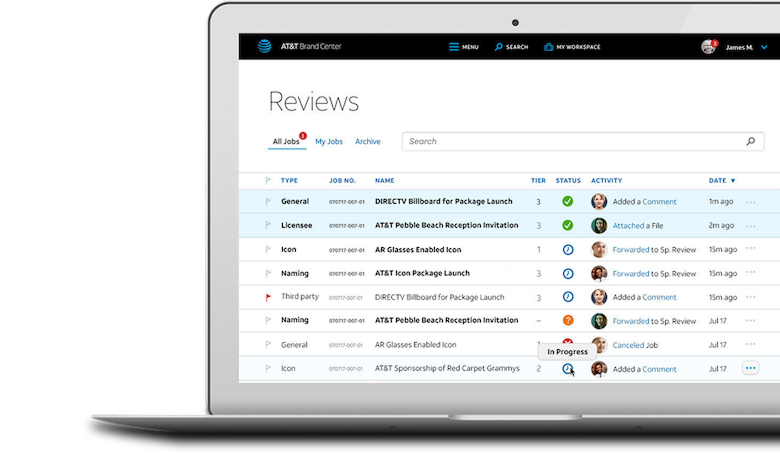
Cropped image of left half of a laptop screen, showing a SaaS dashboard of assets under review for approval, with columns for status and activity.
THE CHALLENGE
Replace fragmented asset submission and approval processes with a scalable governance platform.
AT&T needed to coordinate asset submission, legal review, approvals, permissions, and compliance across multiple enterprise organizations. Existing workflows relied on disconnected manual processes with complex dependencies, making governance difficult to manage, difficult to understand, and difficult to scale.
UNDERSTANDING THE SYSTEM
Continuous stakeholder research made complex governance rules explicit and actionable.
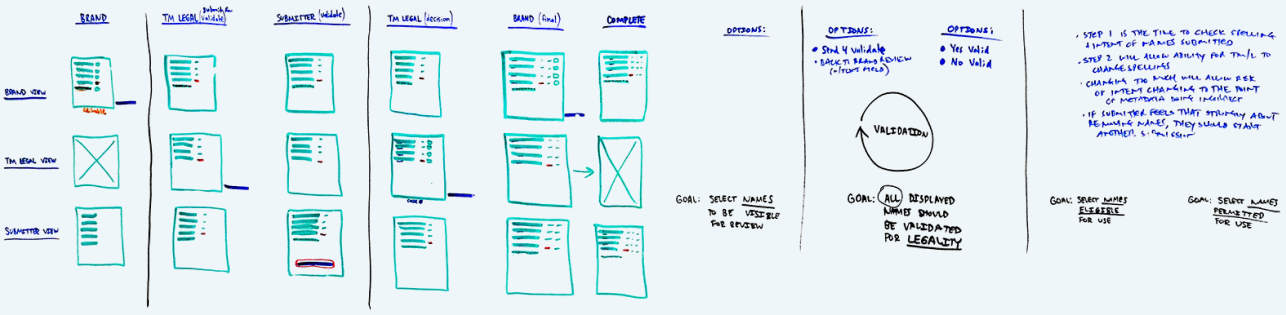
Because the platform served internal enterprise teams, the leads of the eight approval groups were both domain experts and key users of the system. I worked with them and the engineers continuously through stakeholder interviews, workflow reviews, and design sessions to understand approval responsibilities, permissions, asset lifecycles, governance policies, and exception scenarios. I mapped approval responsibilities, permissions, asset lifecycles, governance policies, and workflow dependencies. This research and systems analysis revealed hundreds of interaction states and business rules that needed to behave consistently across every approval path.
A screenshot shows complex flow diagrams.
DEFINING THE PLATFORM
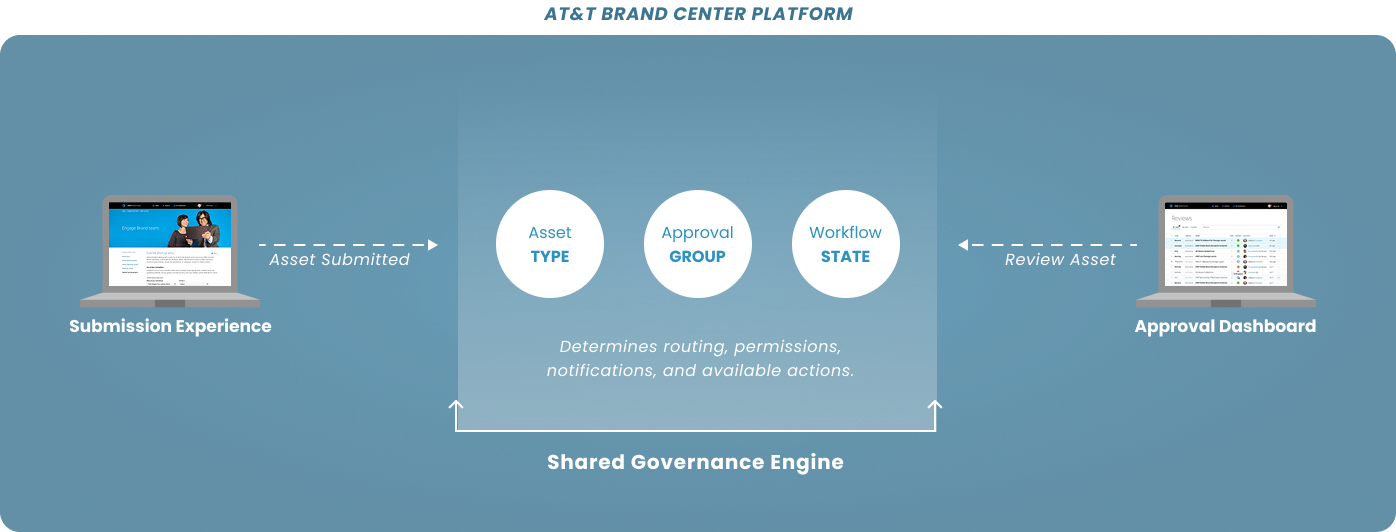
The system behind every AT&T asset: a multi-role approval system and a robust Digital Asset Management system.
The product evolved from an approval dashboard into a guided governance experience. Rather than requiring users to understand complex approval sequences, I designed the governance logic into the interaction itself. The platform combined structured approval workflows with an integrated chat experience that guided users through decisions, requests, revisions, reassignments, and exceptions based on their role and the current state of the asset. This transformed a complex enterprise workflow into a more intuitive, conversational experience while preserving the underlying governance requirements across brand, legal, compliance, and creative teams.
A screenshot shows complex flow diagrams.
WORKFLOW ARCHITECTURE
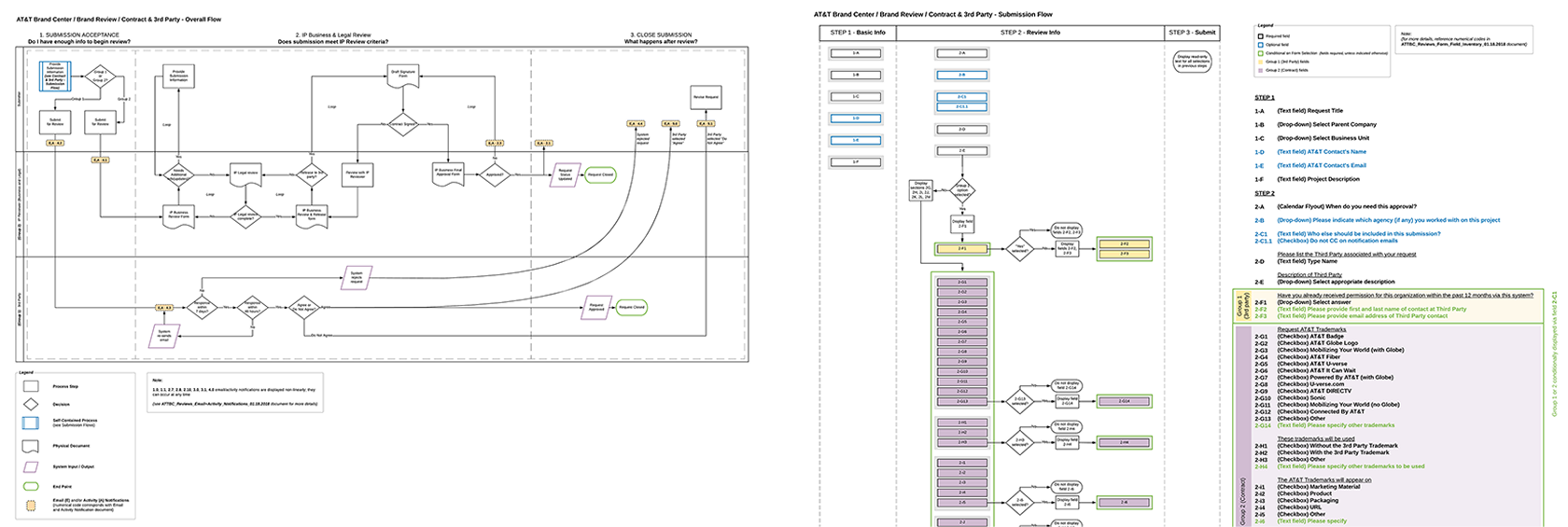
Defining structured approval logic transformed governance complexity into a scalable operational system.
I mapped hundreds of interaction states covering approvals, revisions, rejections, reassignments, and exception scenarios, defining how each decision affected downstream users, permissions, notifications, and workflow progression. The resulting deterministic workflow model translated complex governance policies into implementation-ready system behavior.
A screenshot shows complex flow diagrams.
EXPERIENCE DESIGN
Interfaces simplified enterprise governance without hiding complexity.
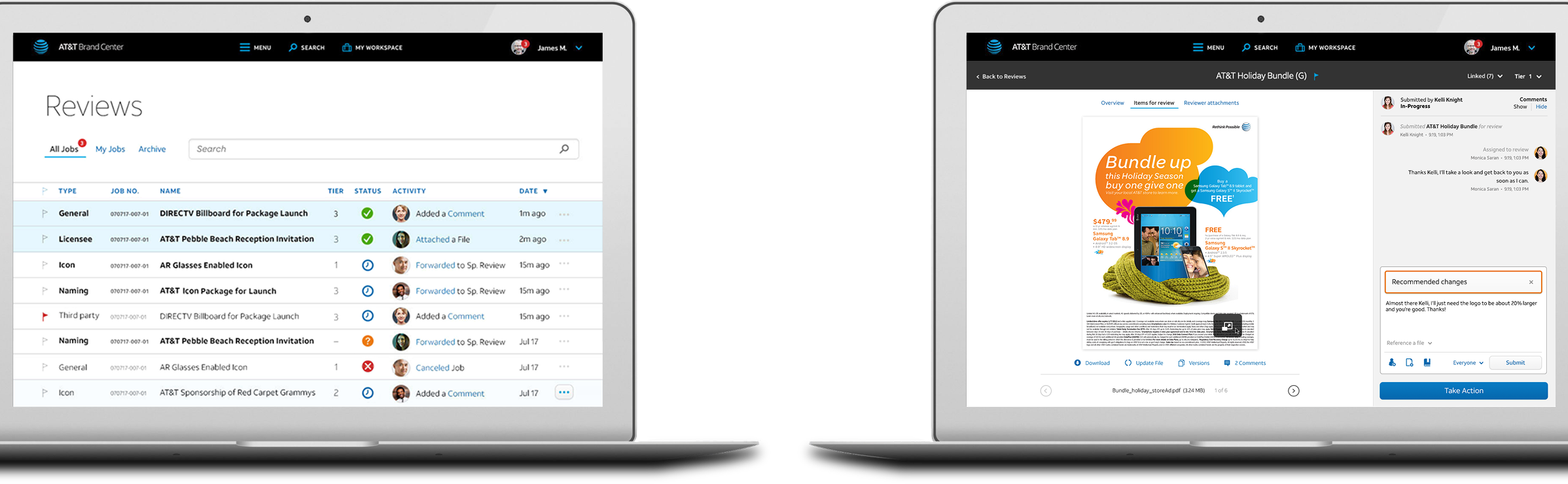
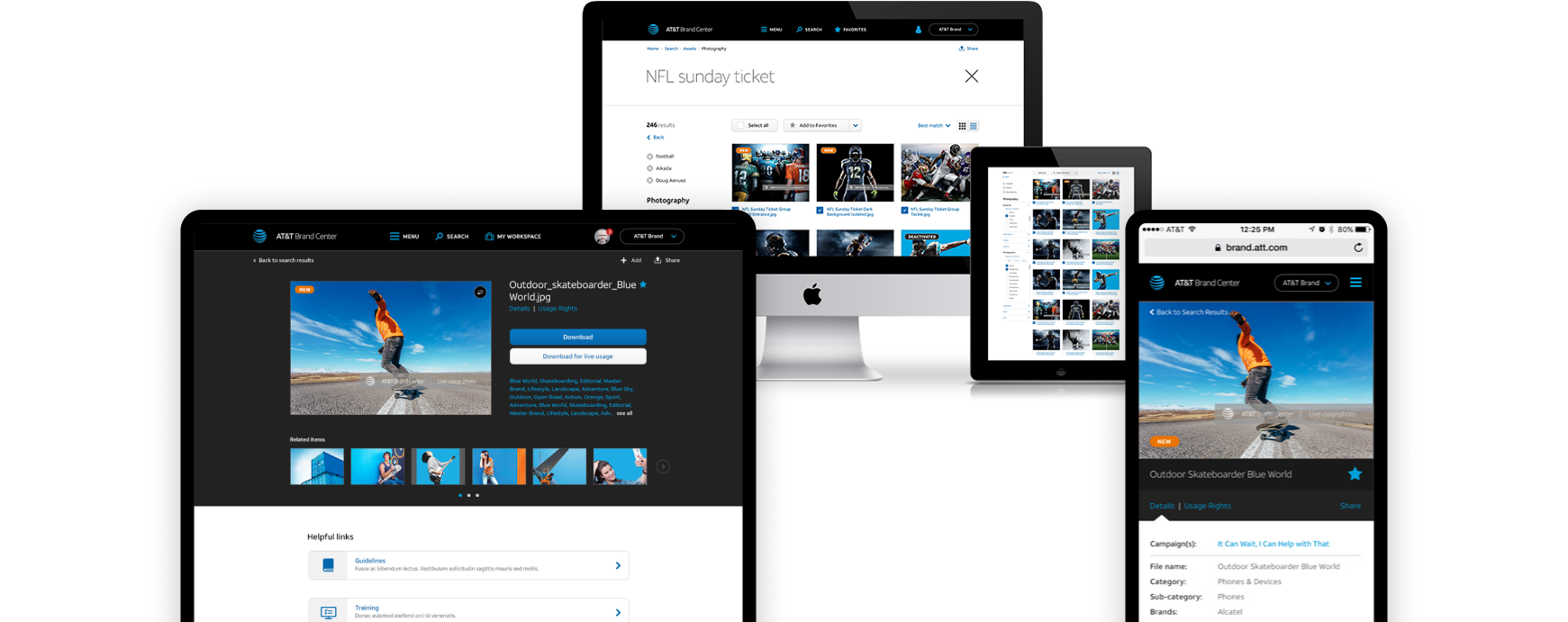
Interfaces presented complex governance workflows through role-specific dashboards, structured approval queues, integrated collaboration, and responsive review experiences. Every interaction was designed to expose the information users needed for confident decisions while allowing the underlying workflow automation to manage complexity behind the scenes.
Two laptops side by side show a UI for a Photography Submission form on one side and the Asset Review approval dashboard UI on the other.
OUTCOME
A scalable governance platform replaced fragmented enterprise approval workflows.
The platform unified asset management, approvals, permissions, and compliance within a single operational system, coordinating eight approval groups across hundreds of workflow states and conditions. The resulting governance model replaced disconnected manual processes and remains in use as AT&T's internal Brand Center.
A collage of devices, including desktop, tablet, and mobile is shown with the UI in them.
END OF CASE STUDY SUMMARY
Full case study available with additional research and design documentation.