Building a Scalable Digital Banking Foundation

created for

Designed a scalable UX foundation during Bank of the West's digital transformation, establishing reusable interaction patterns, information architecture, and responsive components that unified banking experiences across mobile and desktop. The work created a shared UX framework that enabled multiple product teams to modernize banking experiences simultaneously while supporting regulatory requirements, complex transactional workflows, and the bank's broader rebrand.

My Role: Lead UX Designer
Timeframe: 6 months
DESIGN SYSTEMS
FINTECH
INFORMATION ARCHITECTURE
ENTERPRISE UX
Cropped image of left half of a laptop screen, showing a SaaS dashboard of assets under review for approval, with columns for status and activity.
THE CHALLENGE
Modernizing core banking experiences and workflows while meeting regulatory compliance requirements.
Bank of the West was undergoing a major rebrand under its parent company, including a visual identity shift, but the project wasn't simply about refreshing the interface. Multiple product teams were redesigning different parts of the banking experience simultaneously while balancing regulatory requirements, business priorities, and an evolving visual identity. The challenge was creating consistency across a rapidly changing ecosystem without slowing delivery.
UNDERSTANDING THE BANKING EXPERIENCE
Learning how banking operations, regulations, and customer behavior intersected.
I analyzed customer behavior, reviewed analytics, and studied existing banking workflows to understand how customers navigated accounts, payments, onboarding, and business banking experiences. This analysis revealed that the largest usability challenges were not isolated interface problems, but inconsistencies across navigation, terminology, and transactional workflows. One recurring pain point was Same-Day ACH payments, which exposed deeper usability issues around complex forms, terminology, and workflow structure.
A screenshot shows complex flow diagrams.
DEFINING THE PRODUCT FOUNDATION
Unifying fragmented systems and simplifying complex workflows.
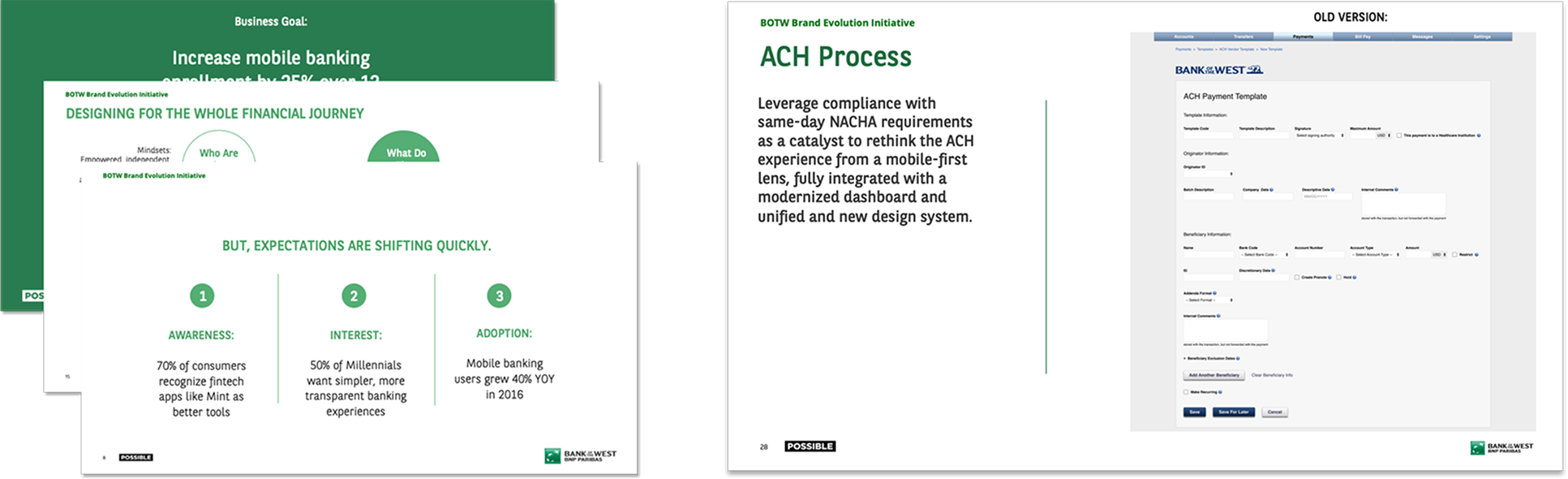
Research showed customers were struggling because navigation, interaction patterns, and workflow structures varied across inconsistently designed products. Those findings shifted the work away from redesigning isolated pages to developing a foundational and reusable design system and UX pattern library aligned with a mobile-first strategy, improving key transactional flows and navigation consistency.
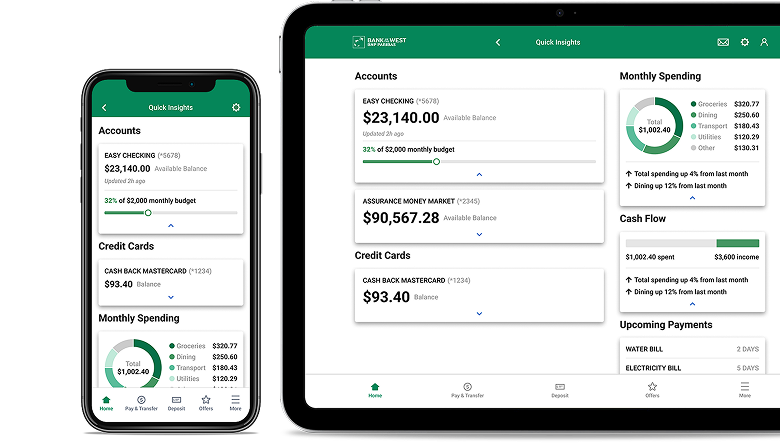
Collage of strategy slides from a strategy deck, a callout quote from user research, and designs for a Quick Balance screen that includes widgets for other banking insights.
SYSTEM DESIGN
Building a scalable design foundation before redesigning individual experiences.
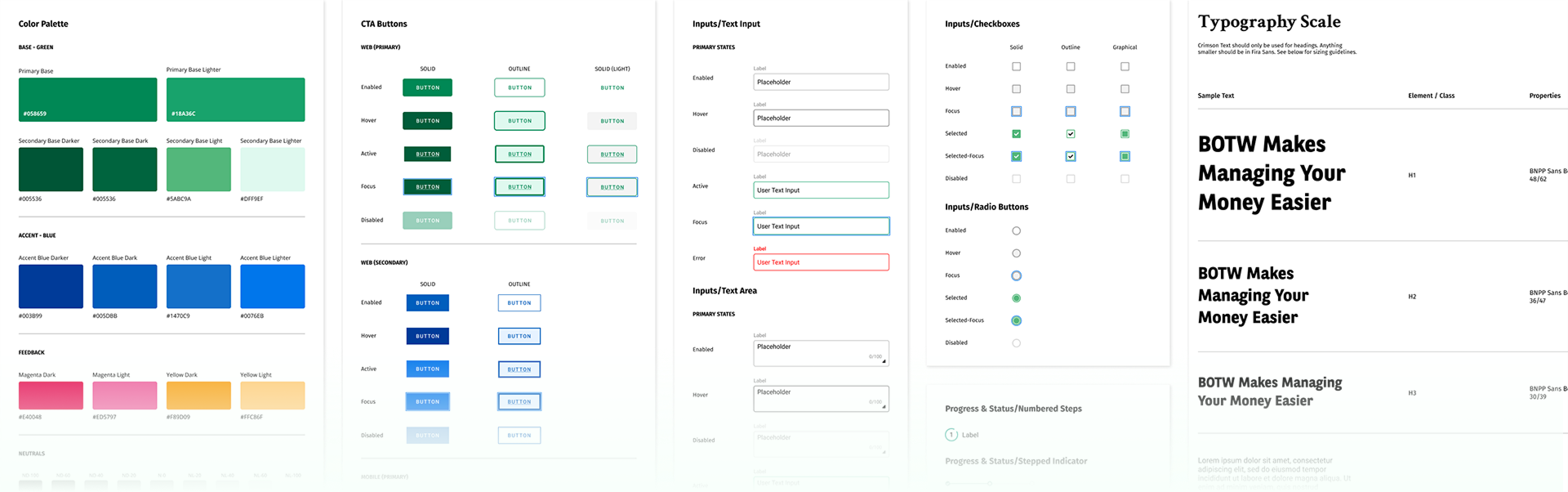
I helped establish a reusable component library spanning mobile and responsive web, introducing standardized navigation models, responsive layout patterns, and information architecture that could support multiple banking products while remaining flexible for future expansion.
Collage of screenshots from the design library, showing colors, font styles, and components.
EXPERIENCE DESIGN
Applying the design system across critical banking workflows.
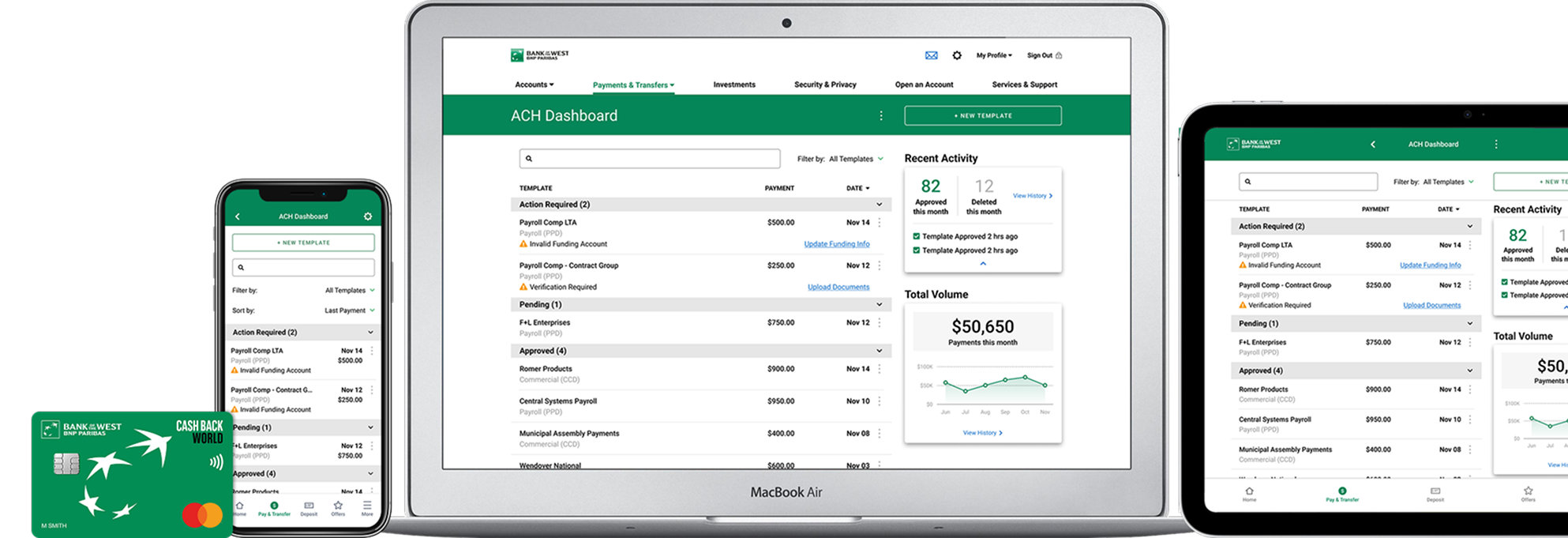
The design system enabled consistent experiences across account management, onboarding, ACH payments, and financial dashboards. New information architectures and interaction patterns simplified complex workflows while giving distributed teams reusable foundations for future banking products.
A screenshot shows complex flow diagrams.
COMPLEX WORKFLOW DESIGN
Redesigning ACH payments and business banking workflows for clarity and compliance.
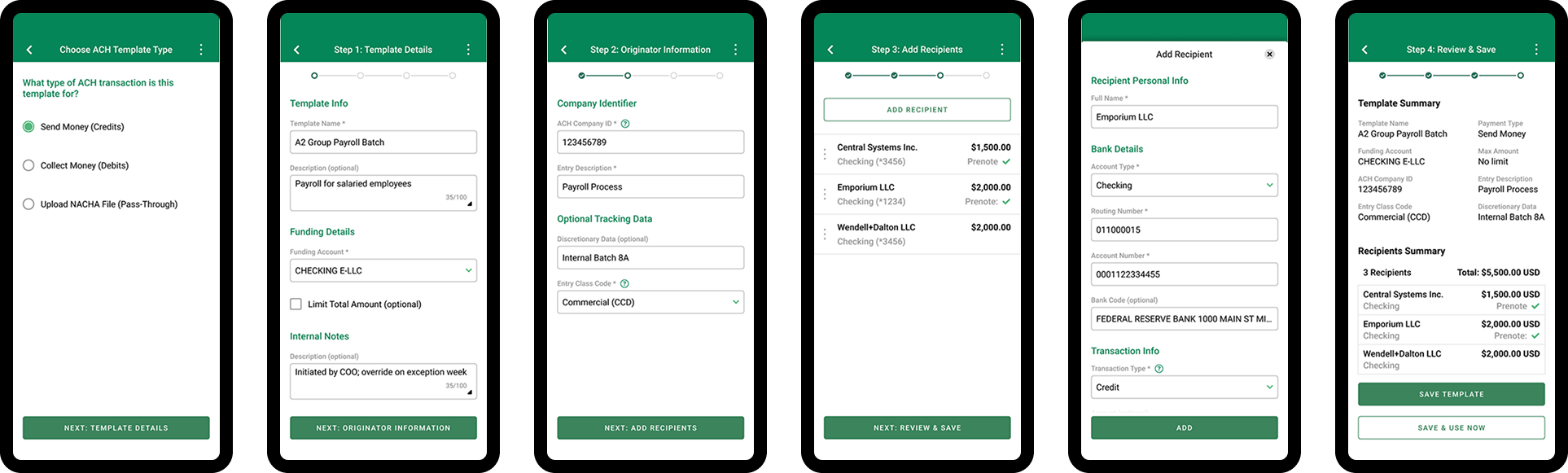
A regulatory update to Same-Day ACH processing created an opportunity to simplify one of the platform's most complex experiences. Dense forms were restructured into progressive workflows that improved comprehension, reduced cognitive load, and better supported business banking customers across devices while maintaining compliance requirements.
Screenshots of multi-step UI for ACH Payment flow.
OUTCOME
Established a scalable UX foundation supporting future banking products.
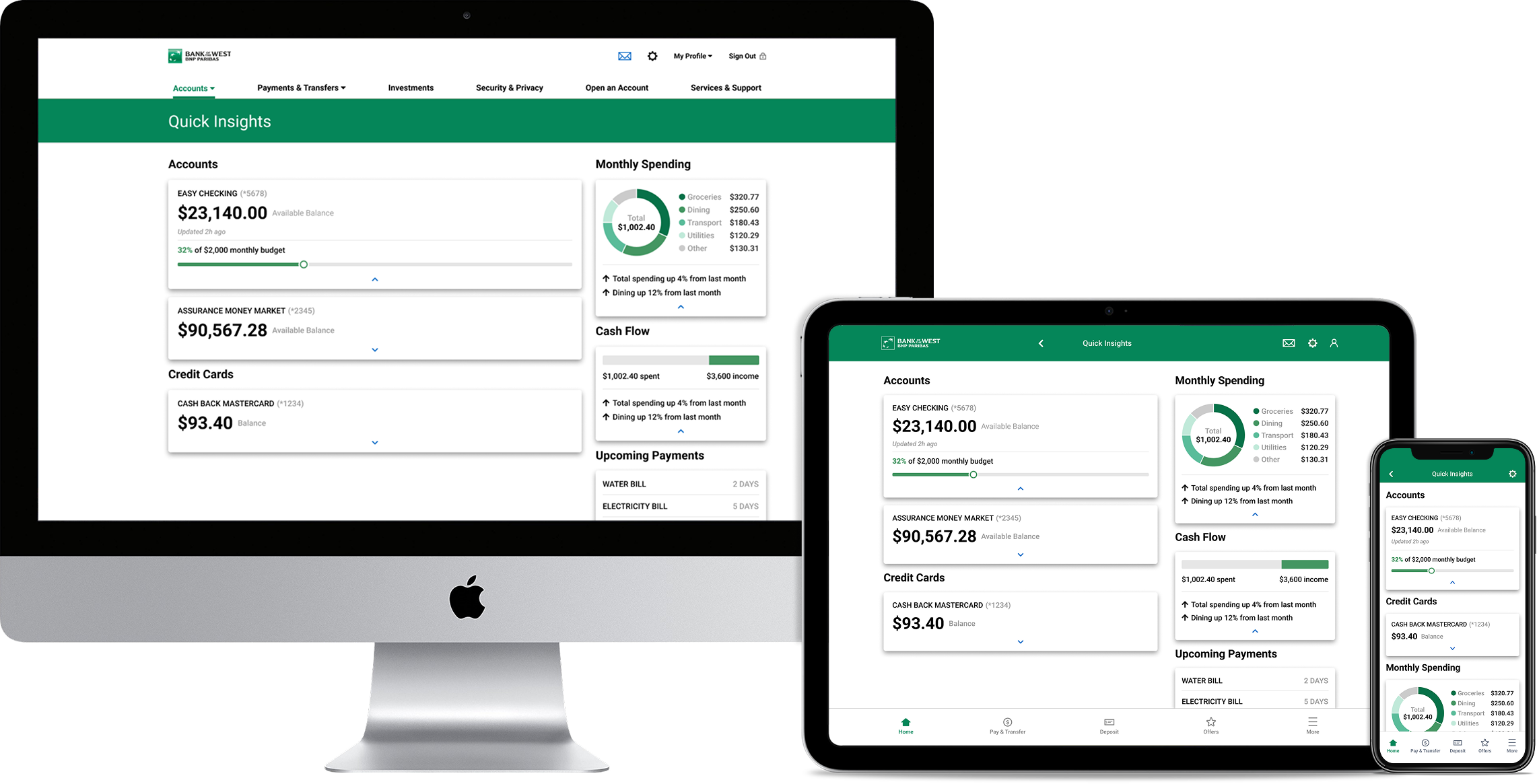
The project established reusable interaction patterns, standardized navigation, and a unified design system that supported Bank of the West's broader digital transformation while simplifying several of its most complex customer workflows. The resulting framework enabled greater consistency across products while balancing customer needs, operational requirements, and regulatory constraints.
A collage of devices, including desktop, tablet, and mobile is shown with the UI in them.
END OF CASE STUDY SUMMARY
Full case study available with additional research and design documentation.