AI Decision Intelligence for Blood Drive Operations

created for

Blood drive planning relied on fragmented systems for forecasting, scheduling, and resource allocation, resulting in inconsistent decision-making across regional and field teams. Users lacked a unified view of demand, capacity, and operational constraints, making planning reactive and limiting visibility into risk and tradeoffs.

My Role: UX Design & User Testing
Timeframe: 2025–Present
SERVICE DESIGN
SYSTEMS UX
OPERATIONS
AI WORKFLOWS
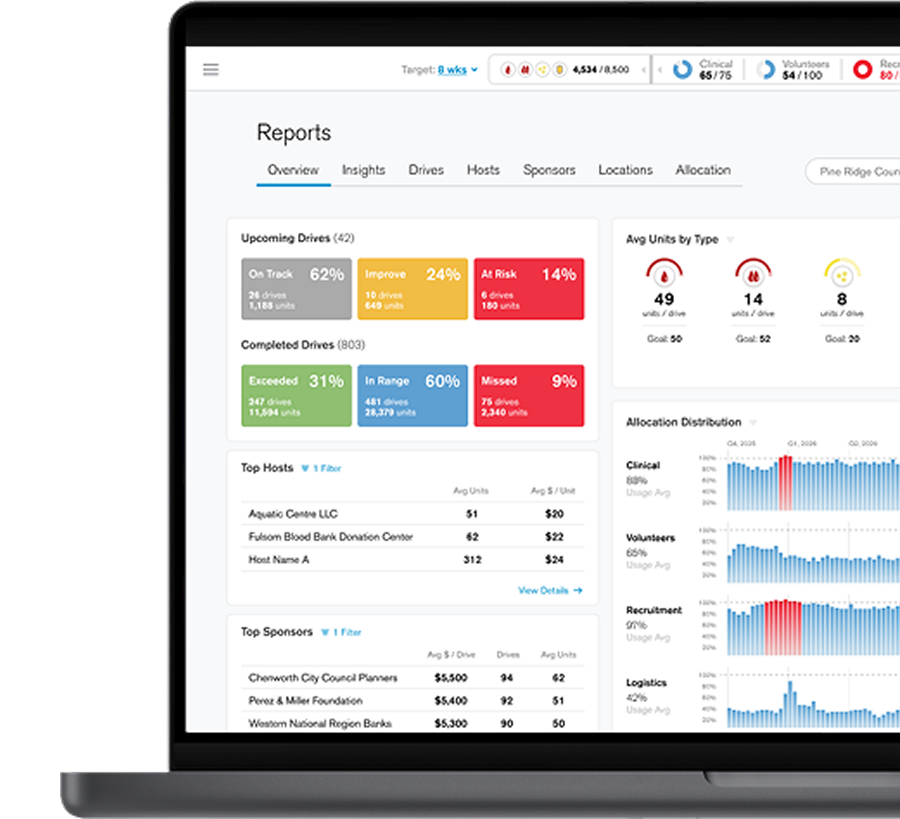
Cropped image of left half of a laptop screen, showing a SaaS dashboard of metrics for blood drive analysis and reporting.
THE SERVICE SYSTEM
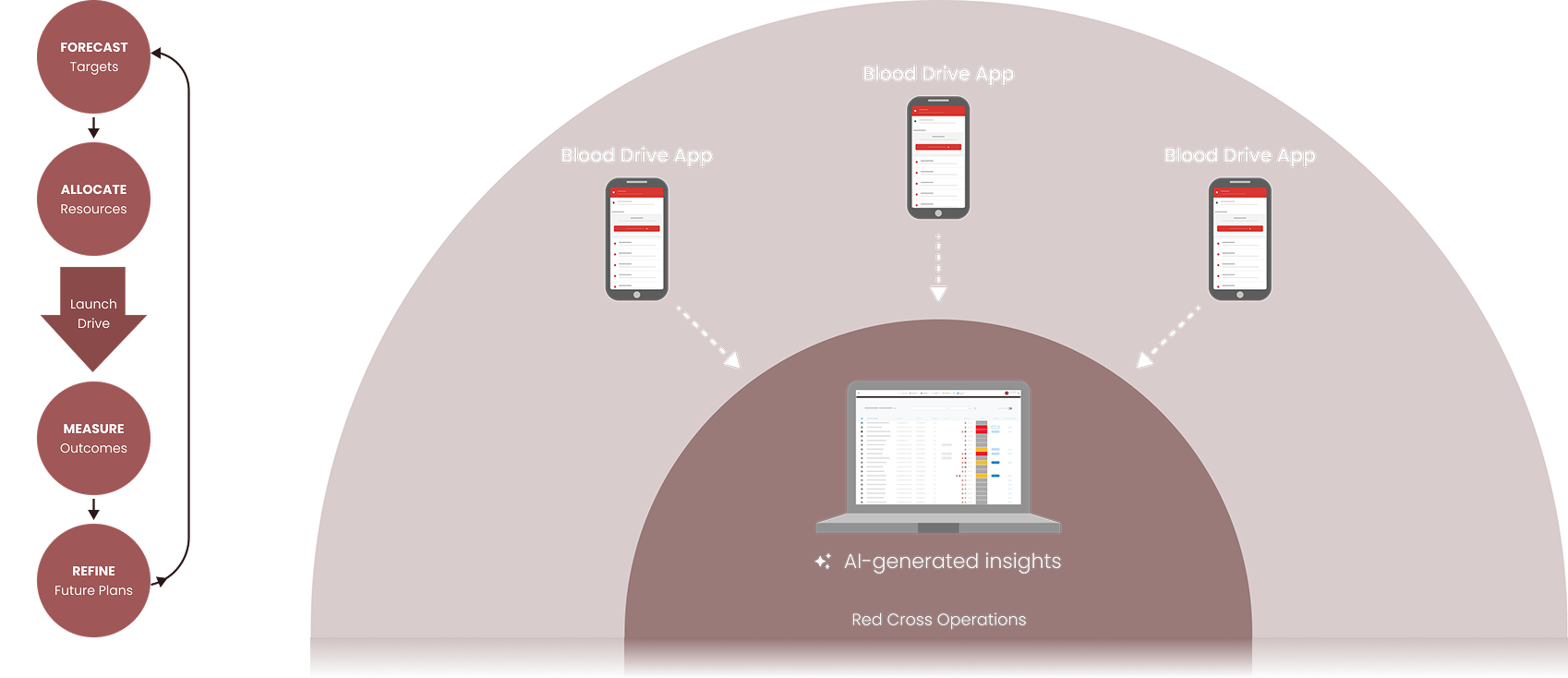
A unified operational system connected forecasting, scheduling, and resource allocation into a single decision workflow.
The platform was designed to unify operational data, planning tools, and field inputs into a structured environment to support multi-role decision-making across regional and field teams.
Diagram of mobile blood drive apps pointing to a central laptop labeled 'AI-Generated Insights, Red Cross Operations'. A diagram of circles leading to each other follows a process: FORECAST Targets, ALLOCATE Resources, Launch Drive, MEASURE Outcomes, REFINE Future Plans. An arrow loops around to show the process is cyclical.
DECISION DESIGN
AI-assisted recommendations supported transparent, human-led operational decision-making.
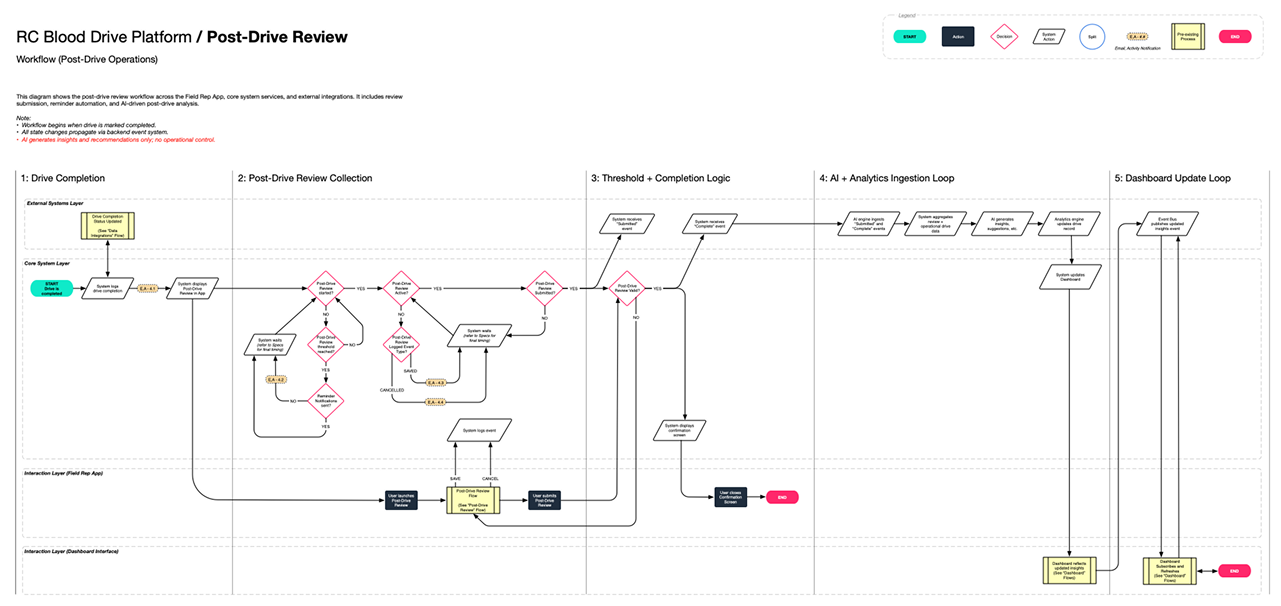
Designed interaction patterns that surfaced predicted outcomes, operational constraints, and trust signals while preserving human oversight and approval pathways for critical decisions.
An image of a flow diagram depicts system architecture for how Blood Drive inputs lead to an AI & Analytics Ingestion Loop.
RESEARCH & VALIDATION
Field research and prototyping aligned system design with real operational workflows.
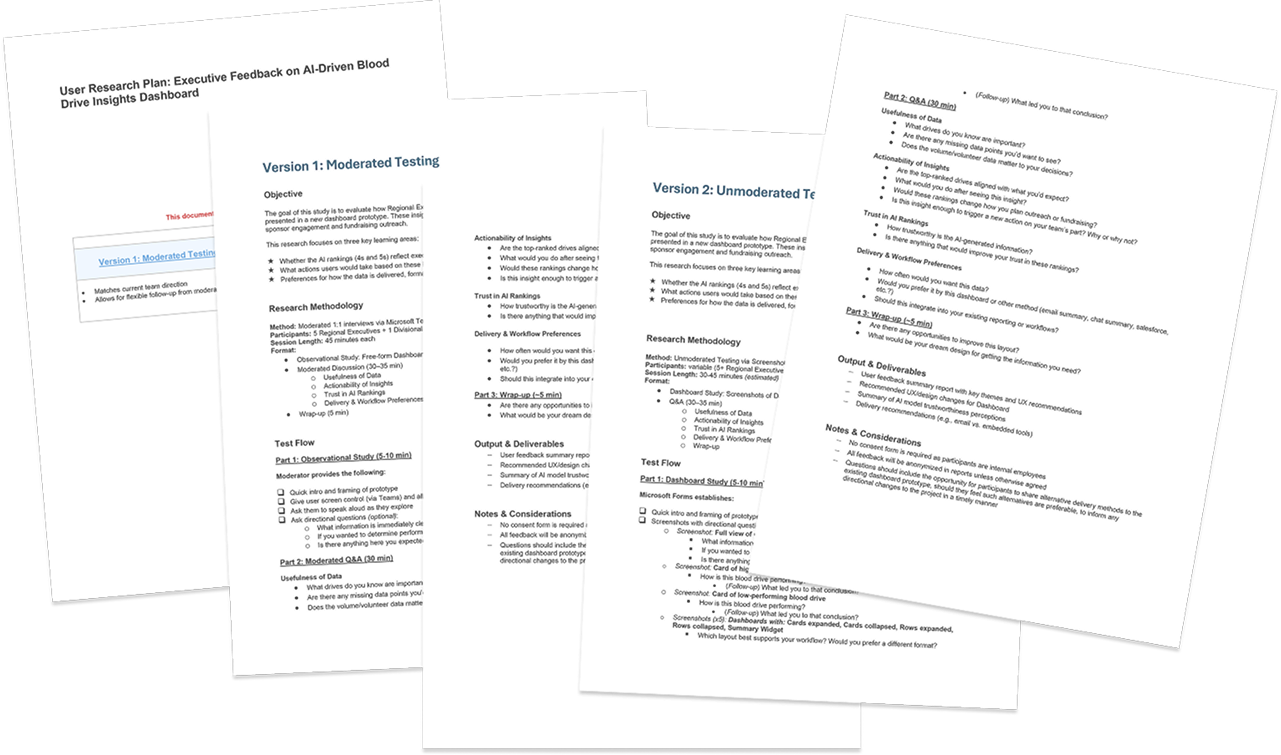
Conducted stakeholder interviews, workflow analysis, and iterative prototyping with operational teams to validate usability, decision clarity, and workflow efficiency under real constraints.
A collage of pages from a User Research Test Plan is shown along with a wireframe of the Blood Drive Dashboard, and a screenshot of a video chat showing a Blood Drive Dashboard protoype.
IMPACT
Improved clarity, coordination, and decision speed across distributed operational teams.
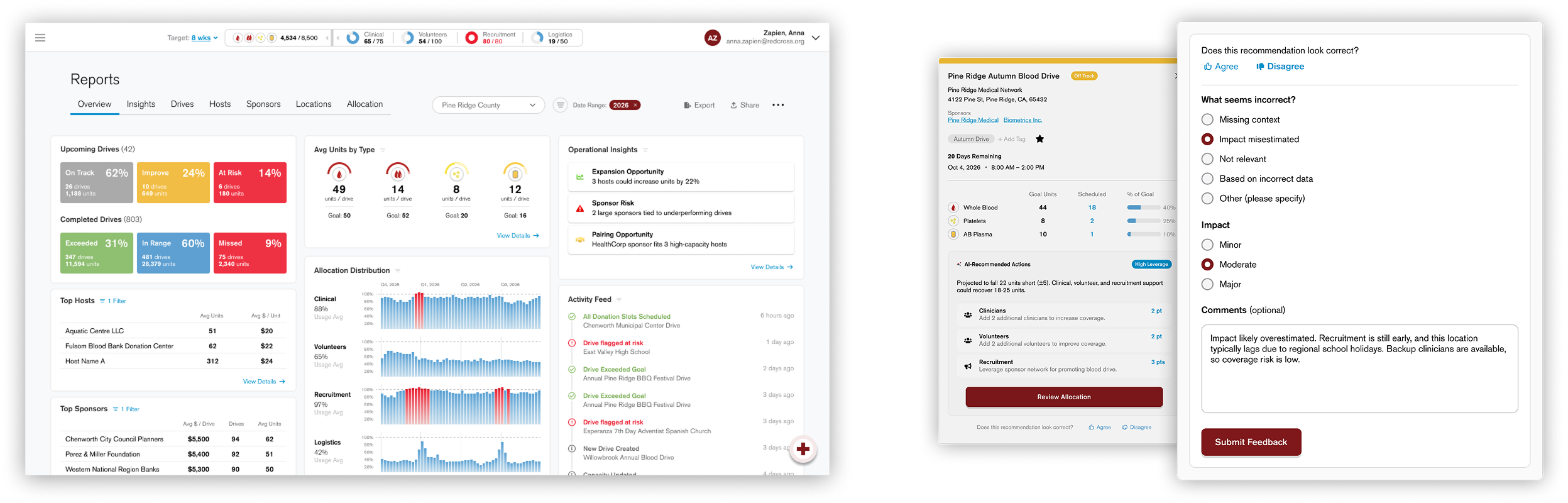
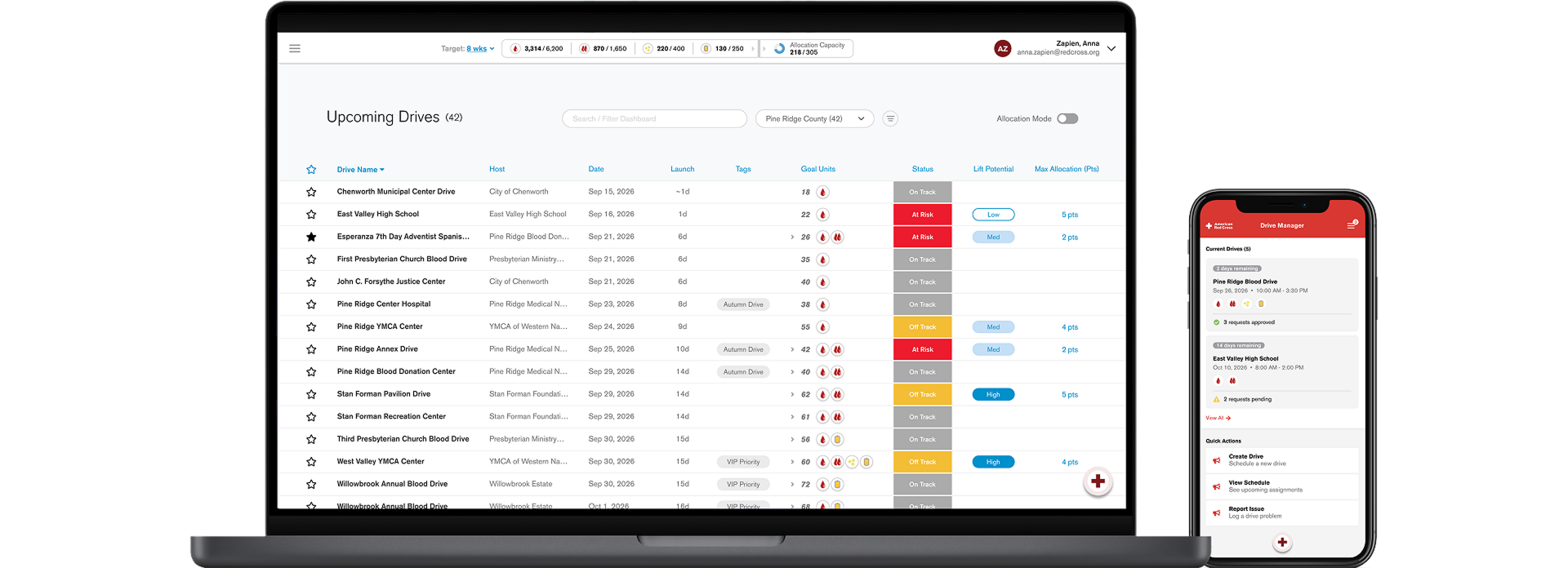
The system reduced planning friction, improved visibility into operational constraints, and enabled more consistent coordination across forecasting and resource allocation workflows.
An image shows a dashboard of Upcoming Blood Drives on a laptop, alongside a mobile device showing an interface entitled 'Drive Manager'.
END OF SUMMARY
Extended Red Cross case study available with access: